
How to Slide Tandems to Fix Overweight Axles
The complete guide to redistributing weight on a semi-trailer. Learn the math, the steps, and the one tool that does it all for you in 10 seconds.
📝 10 min read
Before you can fix an overweight axle, you need to know the limits. The Federal Bridge Formula sets maximum weights for each axle group on the Interstate Highway System:
The steer axle can legally hold up to 20,000 lbs under the Bridge Formula, but most trucks target 12,000 lbs as a practical limit. Some states have different limits — always check state regulations for your route.
Most semi-trailers have tandem axles mounted on slider rails under the trailer frame. These axles can be moved forward and backward along the length of the trailer. When you move them, you change where the trailer’s weight sits — shifting pounds between the drive axles and the trailer axles.
Think of it like a seesaw. The kingpin (where the trailer connects to the tractor) is the pivot point. Moving the trailer axles changes how the load’s weight is distributed on either side of that pivot.
Sliding tandems shifts weight between the drive axles and trailer axles only. It does NOT change your gross weight. If you’re over 80,000 lbs gross, sliding won’t help — you need to remove cargo.
The golden rule: always slide toward the problem.
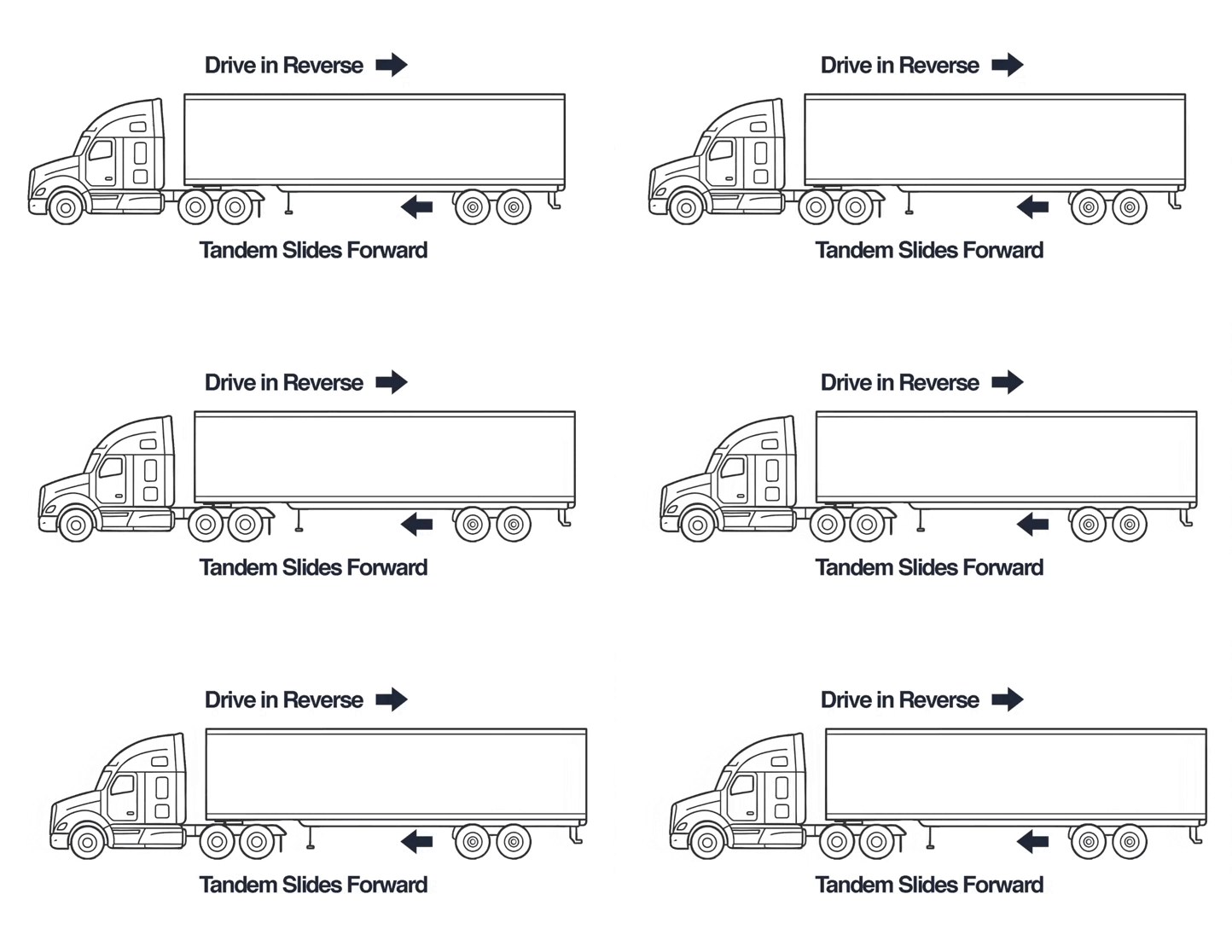
Drive Axles Overweight?
Drive in reverse → tandems slide forward → weight shifts to trailer axles.
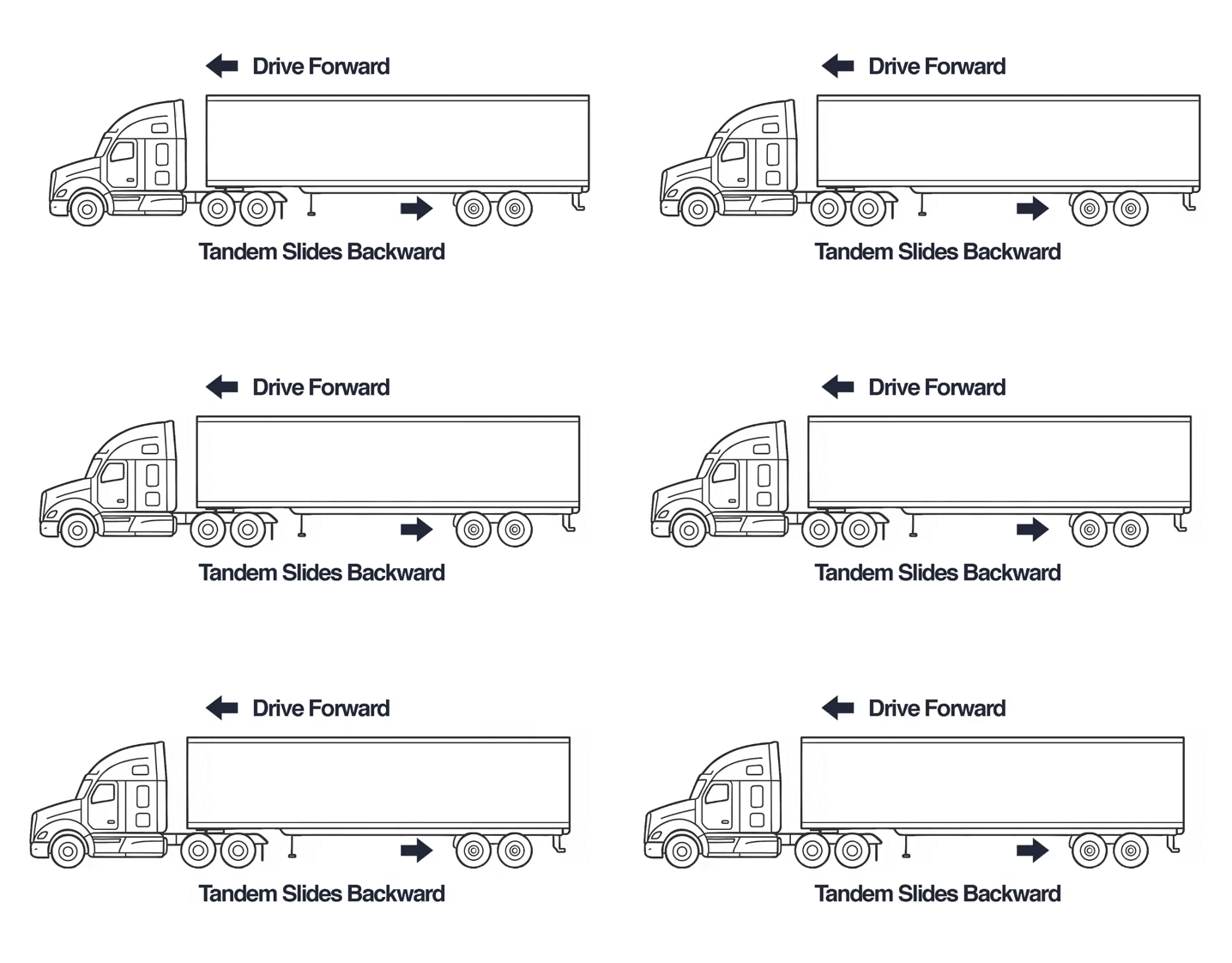
Trailer Axles Overweight?
Drive forward → tandems slide backward → weight shifts to drive axles.
The more the trailer hangs behind the wheels, the more weight goes on the trailer axles. Slide the wheels toward the back = less overhang = less trailer axle weight.
Most trailers use a rail with holes spaced 4 inches apart. Each hole shifts approximately 250 lbs between the drive and trailer axles. (Some trailers use 6-inch spacing at ~400 lbs per hole — check your trailer.)
Tandem Slide Formula
Overweight Amount ÷ 250 = Number of Holes to Slide
(Round UP to nearest whole number. Always reweigh after.)
For example, if your drive axles are 1,400 lbs overweight:
1,400 ÷ 250 = 5.6 → Round up to 6 holes forward
The 250 lbs/hole rule is a rough estimate. In reality, weight also transfers to your steer axle, and the actual shift varies based on load placement, 5th wheel position, and fuel level. Scale Right accounts for all of this and gives you the exact adjustment — no guesswork.
Don’t want to do this calculation in your head at the scale? Scale Right does it all for you in seconds. Enter your axle weights and current hole position — the app instantly tells you if you’re legal, how many holes to slide, and which direction.
Scale Right: Weight Your Truck
The app every driver needs. Input your axle weights, get instant results. No math, no mistakes, no tickets.
Instant tandem slide suggestions.
2,200+ scale locations
Works offline
4 languages
Free to start
You pick up a load and hit the CAT scale. Here’s what the ticket says:
⚖️ Scale Ticket — Before Adjustment
Drives are 1,500 lbs overweight. Drives are the problem → slide toward the problem → slide tandems forward.
🧮 Calculation
Slide tandems FORWARD 6 holes
✅ Scale Ticket — After Adjustment
250 lbs/hole is an estimate that varies based on load distribution, trailer type, and 5th wheel position. Always reweigh after sliding. Uneven loads cause significantly different per-hole weight shifts.
Getting legal isn’t always just about sliding tandems. Sometimes adjusting your 5th wheel helps. Burning fuel on a long run changes your axle weights. And every state has kingpin-to-rear-axle distance rules that limit how far you can slide. Scale Right checks all of these variables so you don’t fix one problem and create another.
🔧 Lubricate your slider rails. Rust and grit jam the mechanism. A quick spray saves you from fighting the lever at the worst time.
📏 Know your state kingpin laws. Some states restrict kingpin-to-rear-axle distance. California’s 40-foot rule is the most common.
⚖️ Weigh close to the shipper. If you’re overweight, find out before you’re 200 miles down the road.
🧊 Watch your surface. Gravel, ice, and wet grass make sliding tandems difficult and dangerous.
📱 Use Scale Right’s scale finder. Find the nearest CAT scale on your route — 2,200+ locations built into the app.
Ready to stop doing tandem math in your head?